
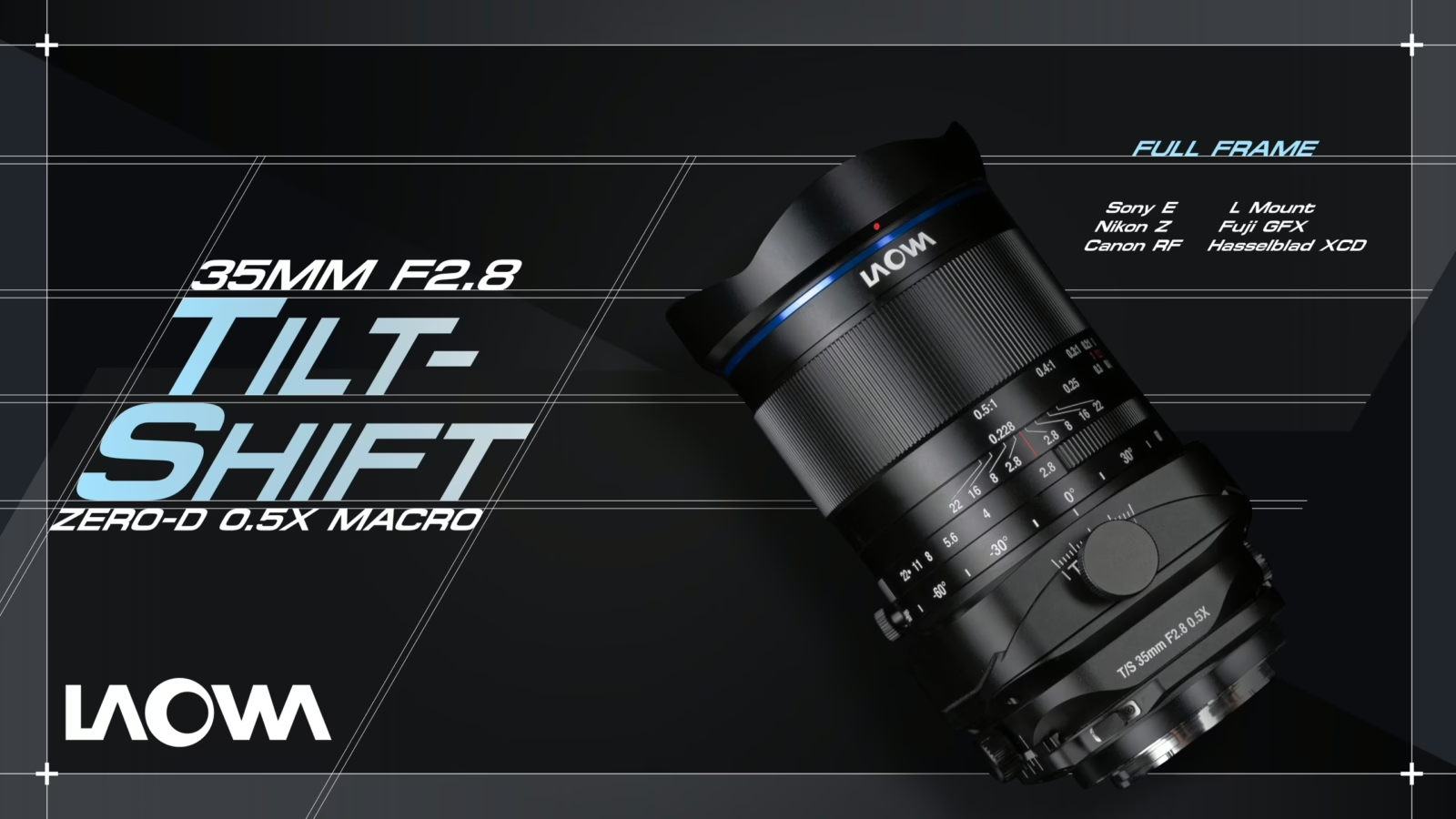

Tilt-shift lenses remain niche tools, yet their creative range is unmatched. The Laowa 35mm f/2.8 Zero-D Tilt-Shift brings this control to both photographers and filmmakers, offering a flexible tool for architecture, tabletop work, and precision-based shooting. Most lenses only offer zoom, focus, and sometimes an aperture ring, but tilt-shift optics provide direct manipulation of the light angle and focal plane. This lens expands that freedom while adding an uncommon benefit for the category: 0.5x macro capability.
Optical Features
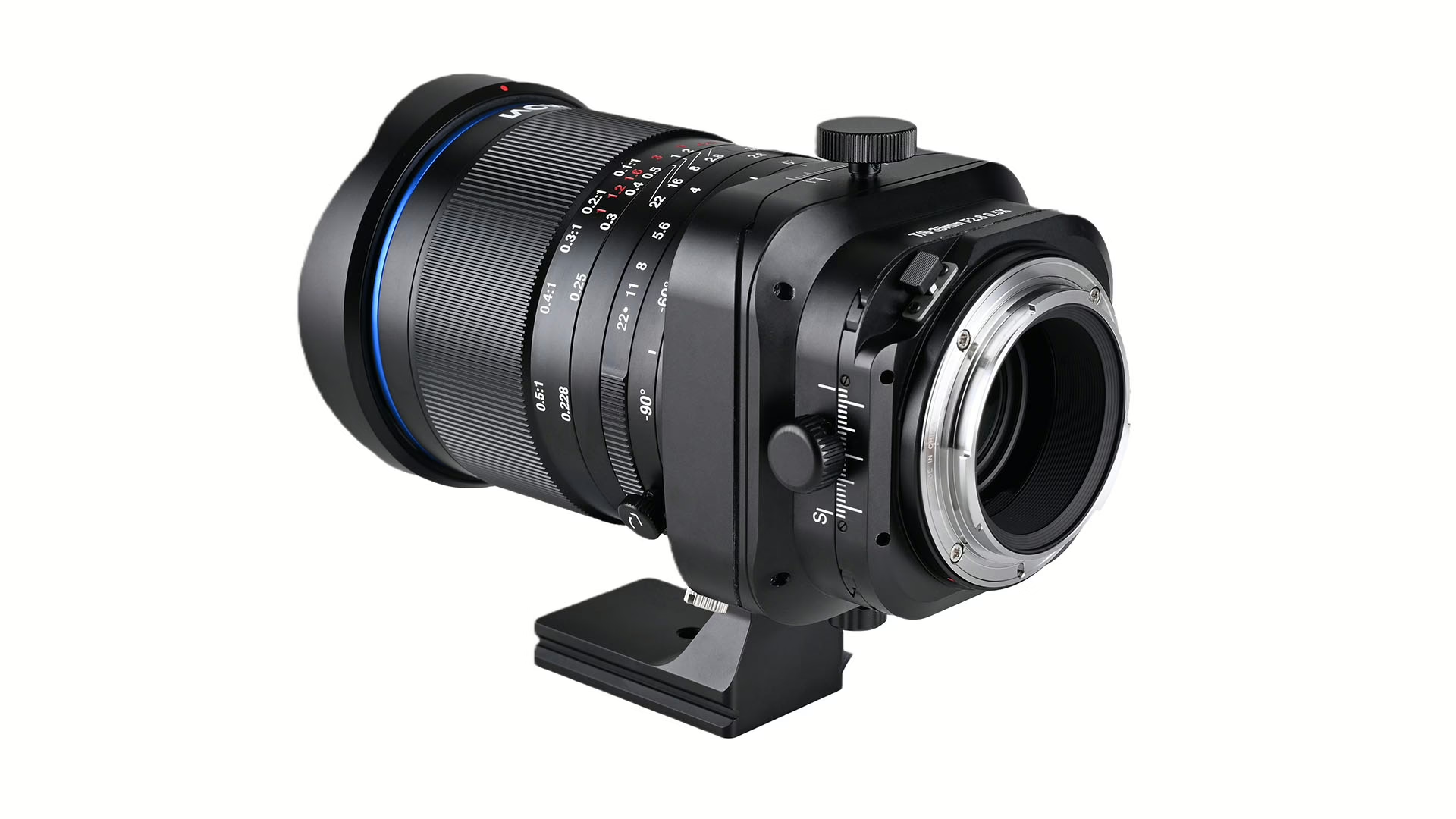
The Laowa 35mm f/2.8 Zero-D Tilt-Shift uses a 14-element, 12-group optical design that minimizes chromatic aberration thanks to its APO configuration. The Zero-D designation indicates very low distortion, and the lens reaches an 87.5-degree angle of view on full-frame bodies. It offers ±10 degrees of tilt and ±12mm of shift, while medium-format users on GFX or XCD mounts get ±8mm of shift. With a close-focus distance of 22.8cm and 0.5× magnification, it delivers macro performance rarely found in tilt-shift lenses.
Creative and Corrective Control
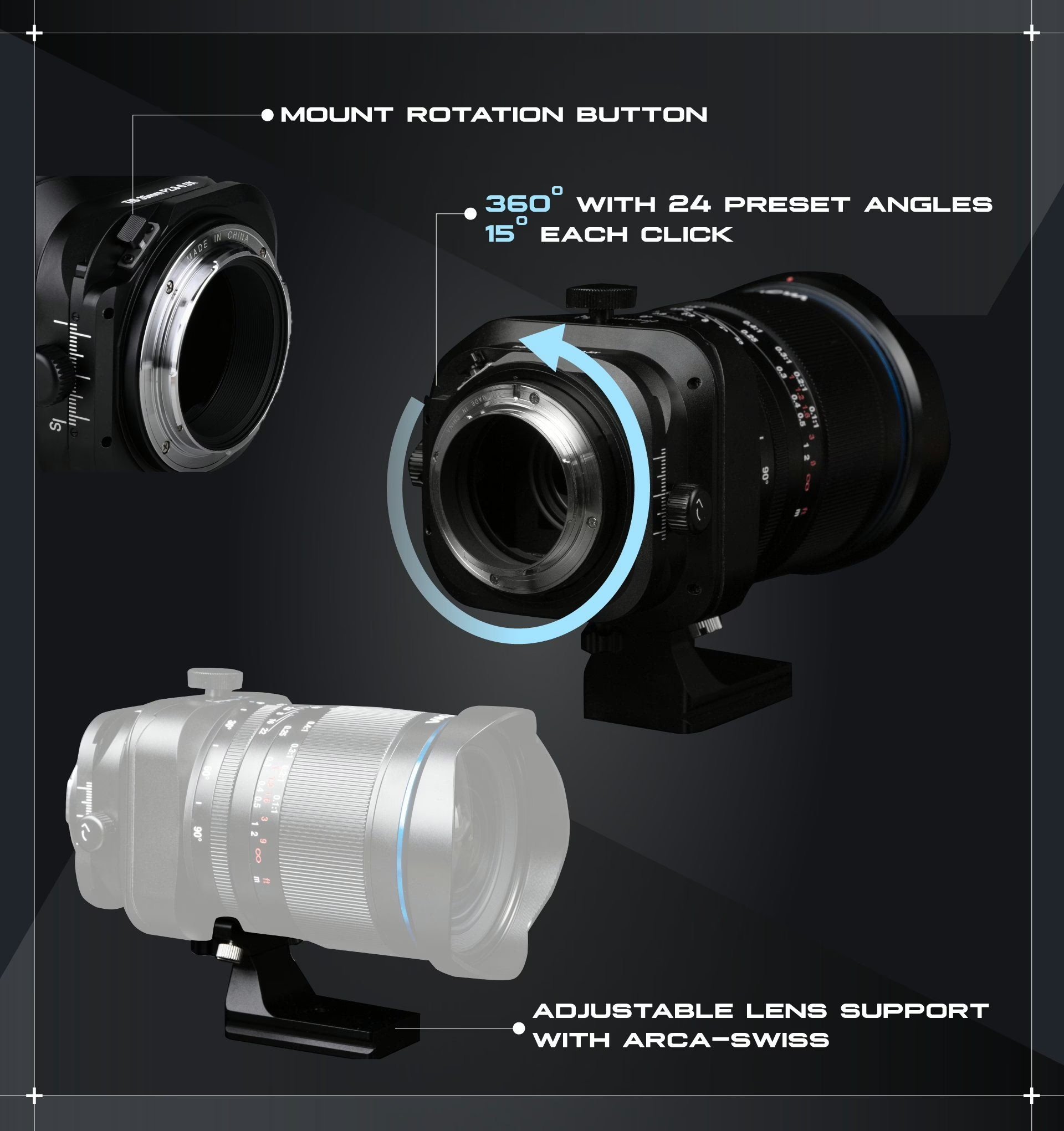
Tilt and shift movements allow creators to correct perspective distortion or exaggerate it for stylistic shots. The shift mechanism helps maintain straight architectural lines, while tilt adjustments can redirect the focus plane for product shots or miniature-style effects. These controls allow many corrections to be performed optically rather than relying on post-production tools.
Build and Ergonomics
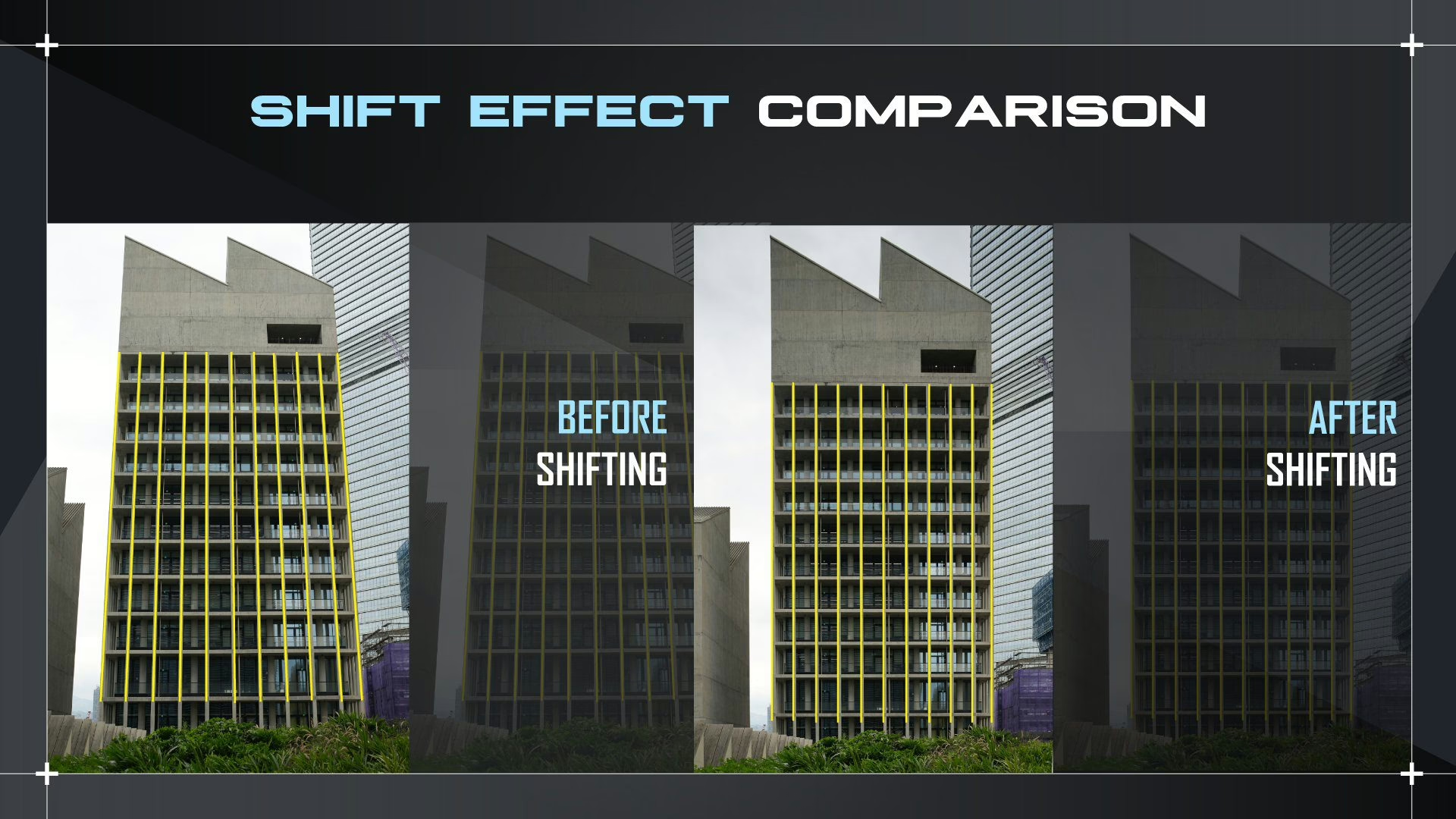
The body includes multiple knobs and rings, giving precise mechanical control. The lens features tilt and shift mechanisms, lock buttons, and a rotating optical axis that turns 360° in 15° increments. It uses a standard 77mm filter thread and includes a detachable Arca-Swiss tripod foot that stabilizes detailed work. The lens weighs 1,350g and is fully manual, including a mechanical 15-blade aperture that produces smooth bokeh. The front element is protected with Laowa’s Frog-Eye coating to resist moisture and debris.
Mount Options
The lens has no electronics, so Laowa can easily produce it for multiple systems. It is available for Sony E, Nikon Z, Canon RF, L-Mount, FUJIFILM GFX, and Hasselblad XCD cameras. This wide compatibility makes it appealing to hybrid users who work across different brands, though some recent LUMIX models may not be supported.
Alternatives
The tilt-shift market is small, but a few notable alternatives exist:
- FUJIFILM GF 30mm f/5.6 T/S
Offers up to 15mm of shift, built for medium-format resolution demands, but is larger, slower, and significantly more expensive.
- Canon TS-E 24mm f/3.5L II
Delivers ±8.5° tilt and ±12mm shift, offers excellent optical performance, and uses the adaptable EF mount.
Neither provides macro capability, making the Laowa the only option in this group offering 0.5× magnification along with full tilt-shift movement.
Who Is It For?
This lens suits creators who value precision and prefer solving perspective and focus challenges in-camera. It’s ideal for architecture, product photography, tabletop cinematography, and any workflow that benefits from adjustable focus planes. Although it requires slower, more deliberate operation, it provides creative options that software alone cannot replicate cleanly, especially for video work.
Price and Availability
The Laowa 35mm f/2.8 Zero-D Tilt-Shift is priced at $1,249 / €1079 and is available across all supported mounts as of November 25, 2025.