


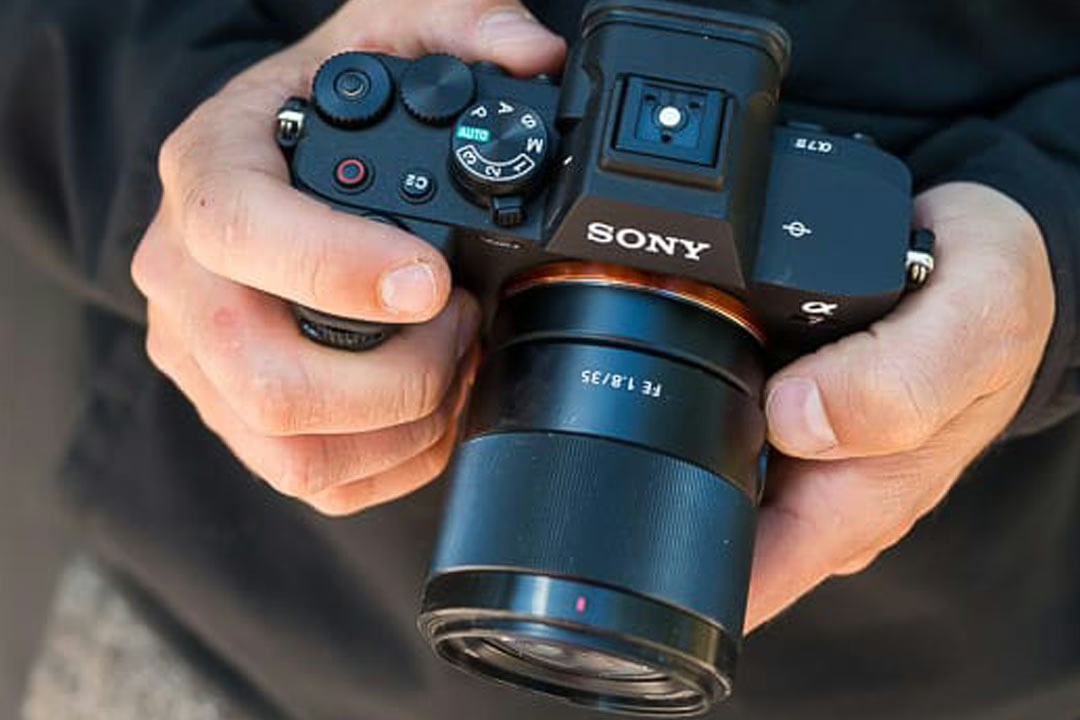
The Sony A7 V enters the market as a strong all around camera that builds on the success of the A7 IV. It arrives during a year filled with impressive releases from Canon, Nikon and Panasonic, yet it manages to stand out with meaningful improvements that matter in real shooting situations. The body looks familiar, but the changes inside create a very different experience for photographers and filmmakers.
A familiar body with smarter updates
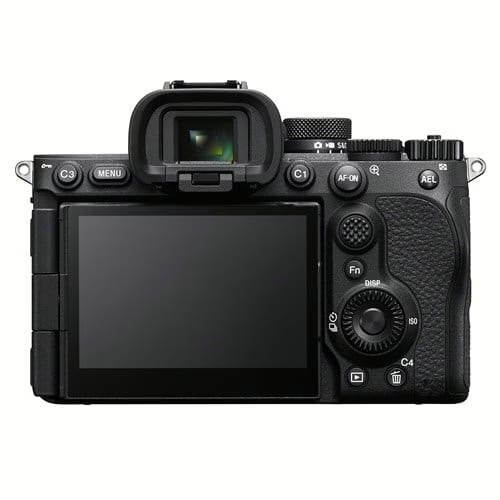
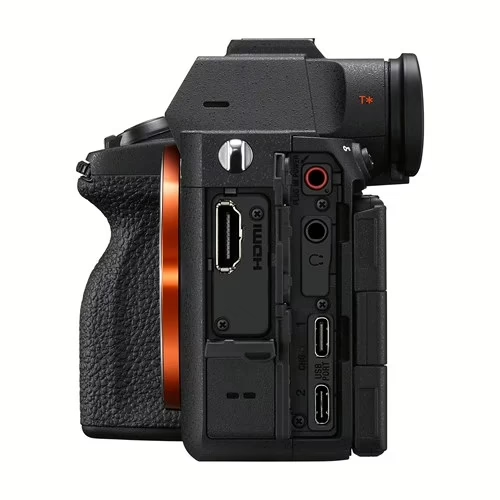
The Sony A7 V keeps the same chassis as the previous model. The camera uses the same well known buttons and controls that many photographers appreciate. It offers a single UHS II SD slot and one hybrid slot that accepts CFexpress Type A and SD cards. The camera weighs about 24.5 ounces with a battery and card installed. The build feels solid in the hand and the weather sealing inspires confidence when shooting outdoors. The design also includes two USB C ports, one for charging and one for data transfer.
Sony includes the same Z battery, but the new Bionz XR2 processor uses power more efficiently. The result is a strong rating of about 630 shots while using the viewfinder. The camera also adds an improved stabilizer that delivers around seven and a half stops of compensation. The rear screen uses the excellent articulating design from the A7R V, which makes framing easier in challenging angles.
A new sensor brings faster performance and better image quality
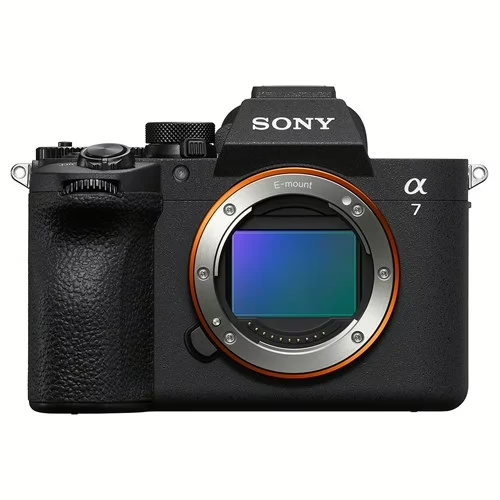
The heart of the Sony A7 V is a brand new partially stacked 33 megapixel sensor paired with the updated processor. This combination brings faster readout speeds, better noise control and a clear bump in detail compared to the older A7 IV. The camera maintains strong dynamic range even with the partially stacked design. This improvement allows photographers to recover shadows and maintain clarity in contrast heavy scenes.
The camera also includes a small badge on the front that hints at its new internal power. The improvements become obvious once you begin to shoot action, wildlife or fast moving subjects.
Autofocus driven by a dedicated AI system
Autofocus is a major highlight of the Sony A7 V. Sony placed an integrated AI chip inside the processor and this single unit handles autofocus, white balance and exposure decisions. This allows the camera to track subjects with impressive accuracy even when obstacles pass between the subject and the lens. Test shots showed steady focus with human subjects in busy outdoor settings.
The detection modes recognize faces, eyes, torsos, animals, insects, cars, trains and planes. The system also reads body positions so it can hold focus when the subject turns or moves abruptly. Photographers can switch modes manually for better consistency, or let the camera choose the subject type if preferred.
Burst shooting for fast action
The mechanical shutter reaches ten frames per second. This is not the fastest in the class, but it is steady and reliable. The buffer handles long bursts until the card fills. With the electronic shutter, the camera reaches an impressive thirty frames per second. The camera also offers a pre capture mode that records one second of action before the shutter press, which helps with unpredictable sports moments.
Image quality shows small differences depending on the shutter choice. The mechanical shutter delivers cleaner shadows and finer detail. The electronic shutter is ideal for fast action when speed matters most. Overall the improvements over the A7 IV are clear in noise control and detail retention.
Strong 4K video features with a few limits
Video shooters will notice major gains with the faster readout of the new sensor. The Sony A7 V records 4K at 60p without a crop. It also records 4K at 120p with an APS C region. Readout speeds are around ten milliseconds which is close to the performance of the A7S III and FX3. This creates sharper footage with less rolling shutter.
The camera does not offer recording above 4K. There is no internal RAW and no external RAW option. This is unusual since many competitors offer 6K or 7K capture. The sensor is fast enough for open gate recording, but the current codec design in the Alpha series prevents it. Even with this limitation, the video output remains clean and pleasing.
Sony also includes a new 4K Angle of View Priority mode. When active, it prevents extra cropping in specific frame rates but disables noise reduction. This mode is best used when you plan to apply your own noise control in editing. Video autofocus performs beautifully with smooth subject tracking and quick response.
Stabilization improves in Active and Dynamic Active modes, but both introduce some crop and can produce blurry frames at slower shutter speeds. Panasonic still holds an advantage in stabilization performance.
Thermal performance is excellent. The Sony A7 V can record for long periods indoors without overheating. Tests showed sessions of up to two hours in demanding modes until the battery expired. This makes the camera dependable for long interviews or events.
A capable contender for creator workflows
The Sony A7 V enters the year as one of the best all around cameras available. It challenges the Canon R6 III and competes closely with the Nikon Z6 III and Panasonic S1 II. The Canon model retains a slight edge for hybrid use, but the Sony brings stronger autofocus and a larger lens ecosystem. Photographers and videographers seeking a single camera that performs well in nearly every project will find the A7 V ready for demanding work.
Price at £2,799.00 / €3200