
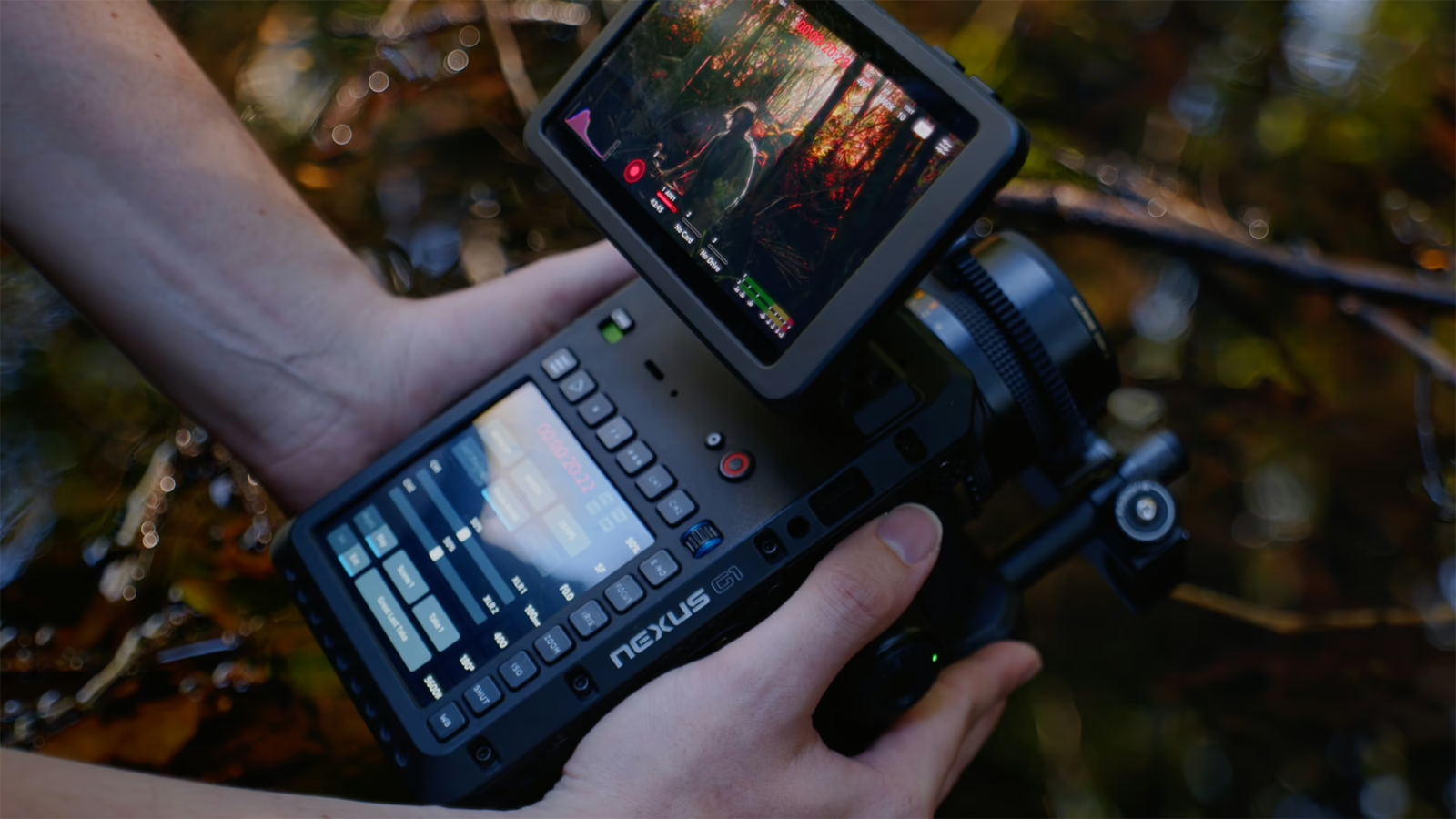

For filmmakers following this ambitious independent project, this update marks a major step forward. The Nexus G1 built around the Blackmagic Pocket Cinema Camera 6K imaging system but redesigned with a modular body has reached full operational status after steady development since January 2024. Earlier reports covered preorder news and early prototypes, but Update #10 confirms that the imaging system, cooling system, MaxDrive storage, and optical system are all complete and tested.
The short film released with the update offers the first real footage from the camera. The team captured almost everything handheld, using a mix of vintage lenses, affordable cine primes, and Sigma photo lenses. This approach gives filmmakers a practical view of what the Nexus G1 can deliver with realistic, widely available glass instead of expensive cinema optics.
Field testing in tough conditions
The team spent several weeks shooting in the hot, humid Australian rainforest. They reported exceptional run-and-gun usability and said the camera renewed their appreciation for handheld shooting due to its versatility and balance.
Beyond field work, the cooling system completed stress tests in an environmental chamber set at 57°C (134°F), the highest temperature ever recorded on Earth. The Nexus G1 filled an entire 1TB MaxDrive during a continuous 1.5-hour record session without overheating. The team designed the cooling system to stay deliberately overpowered, keeping the sensor cool for low noise while maintaining quiet fan performance.
Optical system refinements
One area that received extra development time was the optical system, specifically sensor stack height optimization. This overlooked design factor ensures lenses project their optical wavefront correctly onto the sensor, maximizing edge sharpness and reducing chromatic aberrations.
The team performed precision spectral analysis on multiple IR-filter materials and the E-ND element. Their goal was to meet stack height requirements while hitting target spectral response and strong IR suppression. Griffith University in Brisbane supported the work by providing lab access and spectral equipment.
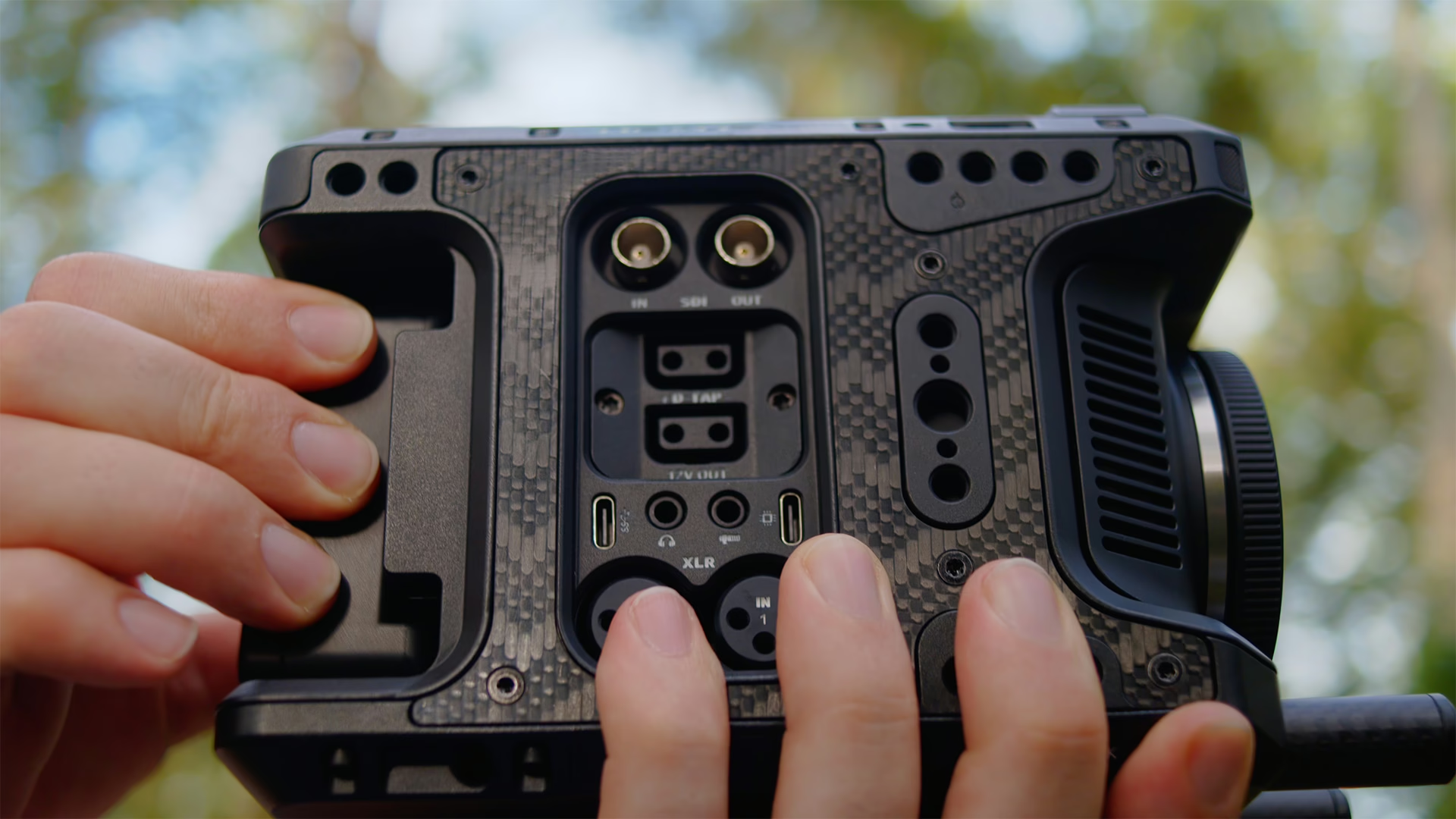
Wireless connectivity unlocked
The magnesium alloy and carbon fiber shell created wireless challenges because these materials block RF signals. After testing various solutions, the team chose to include both internal and external antenna options.
By default, the Nexus G1 uses dual high gain dual band internal antennas that mount flush with the body. For extended-range needs, two MMCX ports on the top allow full size external SMA or MMCX whip antennas.
Full-frame module and gimbal compatibility
The team also designed a proprietary full-frame module that offers an effective full-frame sensor size, optically optimized for the camera. Future updates will include tests using T1.5 primes boosted to T1.0.
Gimbal integration has been validated with the DJI RS3 Pro. The camera transitions seamlessly from handheld setups to tripod, slider, shoulder rig, or gimbal without rebuilding the rig. The Nexus G1 can even power the gimbal directly to reduce overall weight.
Price and availability
The first units are planned for release in Q1 2026, a shift from the earlier Q3 2025 target. The team acknowledges delays due to complex engineering challenges but believes these solutions pushed the design beyond its original specifications. The retail price remains $3,300, with preorders at $2,980. All preorders include the Founders Edition with special markings and Lightning Strike carbon fiber side panels.
The release of this first footage raises key questions for filmmakers: Does the handheld style and accessible lens selection offer a clearer sense of the Nexus G1 in real world use? The team encourages feedback as development continues.